Managing Electrical Risks
Electrical Hazards
Electricity is essential on construction sites but presents serious hazards:
Electric Shock:
- Current passes through body
- Can cause death, severe burns, falls from height
- Low voltages (< 50V AC/120V DC) generally safe, but not always
- 230V AC (standard power) can kill
Arc Flash and Burns:
- Electrical faults create intense heat and light
- Severe burns, eye damage, ignition of materials
Fire and Explosion:
- Faulty wiring, overloaded circuits
- Ignition of flammable materials/atmospheres
Secondary Injuries:
- Falls from height after shock
- Injuries from muscle contractions
Electricity kills quickly. Even brief contact with live parts can cause cardiac arrest.
Who Has Duties?
PCBUs
Must:
- Ensure electrical equipment safe
- Maintain electrical installations
- Use licensed electrical workers for electrical work
- Provide RCDs (residual current devices)
- Test and tag equipment
- Manage risks from overhead/underground electrical services
Licensed Electrical Workers
Only licensed electricians may perform electrical work (installation, alteration, maintenance, repair of electrical equipment).
Exceptions (general workers may perform):
- Replacing lamps, fuses
- Plugging/unplugging equipment
- Resetting RCDs or circuit breakers
Risk Management Process
1. Identify Hazards
Construction Site Electrical Hazards:
- Overhead powerlines
- Underground cables
- Temporary site wiring
- Damaged cables and equipment
- Wet conditions
- Metal scaffolding near electrical sources
- Inadequate RCD protection
2. Assess Risks
Higher Risk Situations:
- Contact with overhead powerlines (cranes, EWPs, scaffolding, long materials)
- Excavation near underground cables
- Wet/damp environments
- Use of metal ladders or scaffolding
- Damaged or poorly maintained equipment
3. Control Risks: Hierarchy of Control
Level 1: Elimination
- Eliminate need for electrical equipment (use battery/pneumatic tools)
- De-energize powerlines before work near them
Example: Request electrical utility to isolate and earth overhead lines before crane operation.
Level 2: Substitution/Engineering
Isolation and Earthing:
- De-energize electrical equipment before work
- Lockout/tagout procedures
- Earthing of de-energized systems
Insulation:
- Insulated cables and equipment
- Insulation barriers around live parts
- Insulated tools for electrical work
Residual Current Devices (RCDs):
- Detects leakage current, disconnects power instantly
- Mandatory for construction sites (WHS Reg 164)
- 30 mA maximum for socket outlets supplying equipment
Double Insulation:
- Equipment with extra layer of insulation
- Marked with double square symbol
- Reduces shock risk
Extra-Low Voltage (ELV):
- Systems ≤50V AC or ≤120V DC
- Reduced risk of electric shock
- Example: 12V or 24V power tools
Physical Barriers:
- Guards around switchboards, junction boxes
- Fencing/barricades around substations
- Covers over floor boxes
Level 3: Administrative/PPE
- Safe work procedures
- Electrical safety training
- Permit systems for work near live parts
- Exclusion zones around overhead powerlines
- PPE (insulated gloves, dielectric footwear) - for electrical workers only
- Safety Observers: Must be competent to rescue and resuscitate (assessed in previous 12 months) for energized work.
4. Maintain and Review
- Regular testing and inspection
- Test and tag portable equipment
- RCD testing (push test button monthly, full test every 6 months)
- Replace damaged cables immediately
RCDs (Safety Switches)
How RCDs Work: Monitors current flow. If imbalance detected (leakage to ground through person), disconnects power within 30 milliseconds.
Types of RCDs
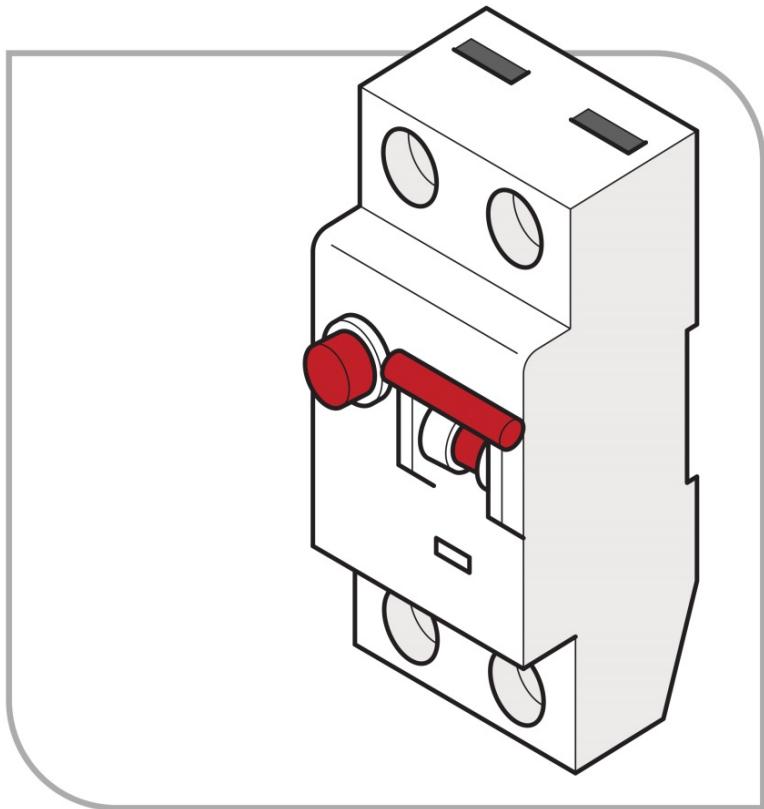 Figure: Switchboard RCD unit
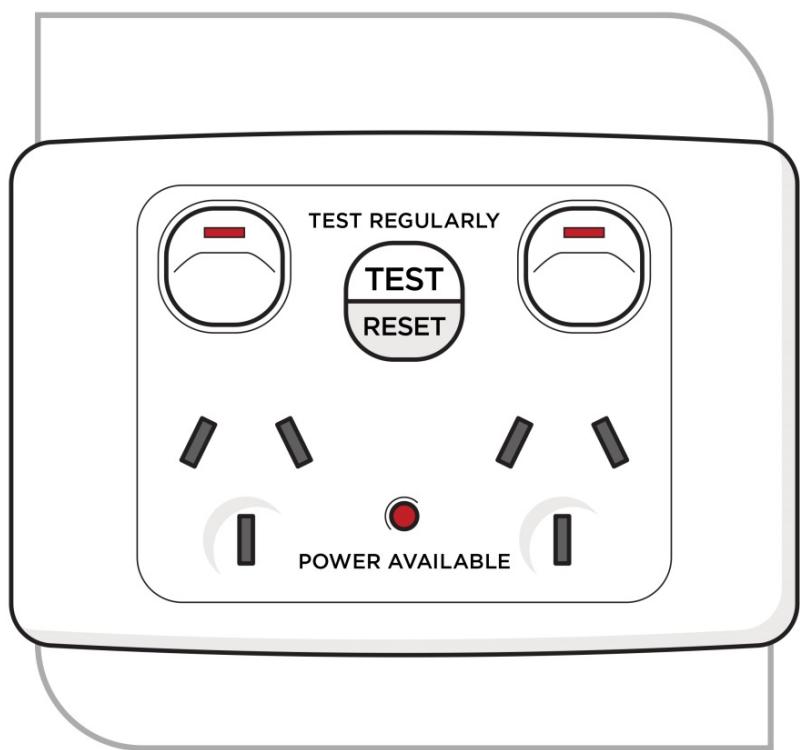 Figure: Fixed socket outlet RCD unit
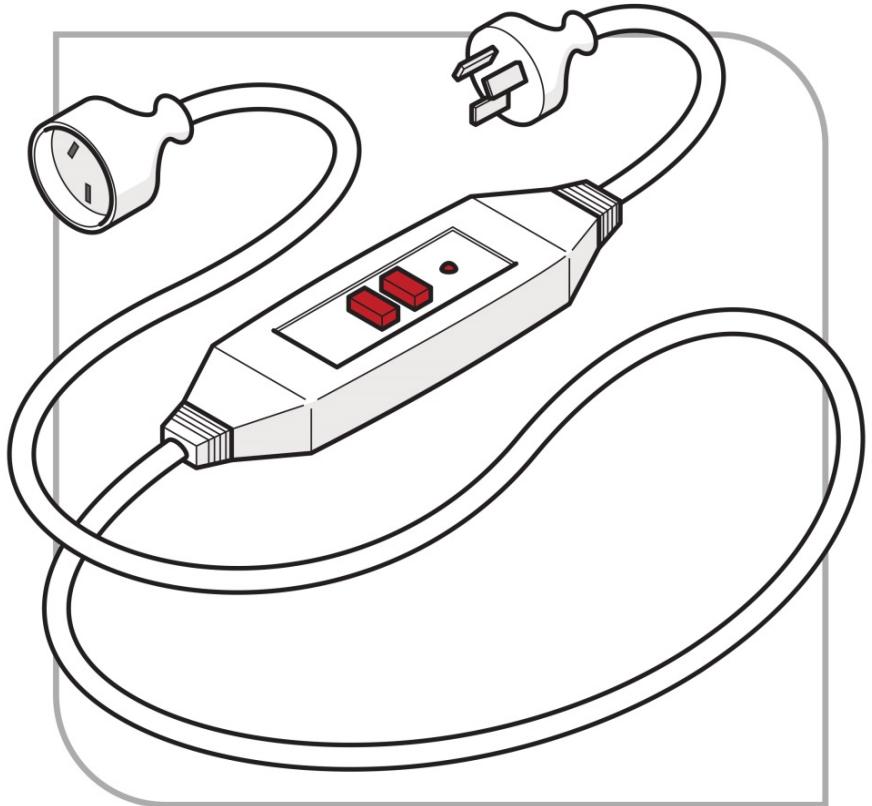 Figure: Portable RCD fitted directly to power cable
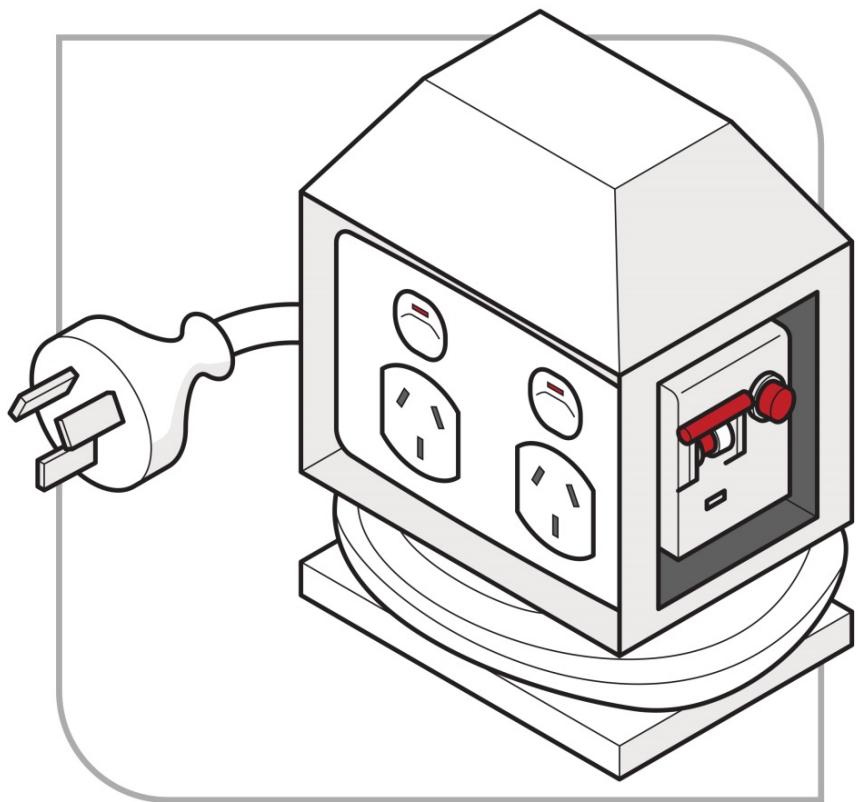 Figure: Portable RCD protected power board
Requirements for Construction:
- RCD protection for all socket outlets supplying portable equipment
- Portable RCDs if fixed RCDs not available
- Test before each day's use (push test button)
RCDs are the primary protection against electric shock on construction sites. Never bypass or disable.
Overhead Powerlines
Extreme Risk: Contact with overhead powerlines causes many construction fatalities.
Affected Activities:
- Crane operations
- Elevated work platforms
- Scaffolding erection
- Carrying long materials (pipes, ladders, formwork)
- Tipping trucks (raised bodies)
- Tree work
Safe Approach Distances
For voltages ≤132,000V:
- Non-electrical workers: Maintain safe approach distances as determined by the electricity supply authority (typically 3 meters, check local regulations)
- Licensed electrical workers: Refer to AS/NZS 4836
For voltages >132,000V:
- Greater distances apply - check with electrical authority
When operating plant, increase distance to 6 meters or more. Account for boom swing, load sway, vehicle movement.
Control Measures
Preferred (Level 1):
- De-energize and earth powerlines for duration of work
If De-Energization Not Practicable:
- Install physical barriers (goal posts, height markers)
- Appoint spotter to watch clearances
- Use insulated/non-conductive equipment
- Establish exclusion zones
- Continuous communication between spotter and operator
Example: Crane work near powerlines - Request utility to de-energize lines, or install goal post barriers and appoint dedicated spotter.
Underground Cables
Risk: Striking underground cables during excavation causes electrocution, burns, explosions.
Before Excavating:
- Dial Before You Dig (1100) - Obtain service location plans
- Locate services on ground (use plans, cable locators)
- Mark services clearly (paint, pegs)
- Expose services carefully (hand dig within 500mm)
- Inspect services (confirm type, depth, condition)
- Support and protect services during work
Free service provides plans showing underground services. Call 1100 at least 2 business days before excavating.
Safe Excavation Procedure
- No mechanical excavation within 500mm of marked services
- Hand tools only (spades, shovels - not picks or mattocks)
- Assume unidentified cables are live
- Locate all services even if only one type expected
- Support services crossing trenches
- Restore covers before backfilling
Temporary Site Wiring
Installation:
- Licensed electrician only
- Adequate capacity for loads
- Protected from damage (elevated or buried)
- RCD protection on all socket outlets
Cables:
- Heavy-duty flexible cables (not domestic cable)
- Supported off ground where practical
- Protected from traffic, plant, sharp edges
- No joins in cables (use correct length)
Switchboards:
- Weather-protected enclosures
- Secured to prevent movement
- RCDs installed and labeled
- Accessible for testing/maintenance
Test and Tag
Portable electrical equipment must be regularly tested and tagged:
Visual Inspection:
- Damage to cables, plugs, casing
- Strain relief intact
- Correct rating for use
Electrical Testing:
- Earth continuity
- Insulation resistance
- RCD function (if built-in)
- Conducted by competent person
Testing Frequency:
- Construction sites: Every 3 months (high-risk environment)
- Other workplaces: 6-12 months depending on environment
Tagging:
- Tag shows test date, next test due, tester details
- Do not use untagged equipment
Wet Conditions
Increased Risk: Water conducts electricity - wet conditions greatly increase shock risk.
Controls:
- Keep equipment dry (covers, shelters)
- Use waterproof equipment rated for wet use (IP rating)
- Use 10mA portable RCDs
- Extra-low voltage tools (12V/24V)
- Delay work until conditions dry where possible
Damaged Equipment
Never use damaged electrical equipment:
- Frayed or cut cables
- Broken plugs or sockets
- Cracked casings
- Damaged switches
Action:
- Tag as defective ("DO NOT USE")
- Remove from service
- Arrange repair by electrician or disposal
Practical Construction Example
Scenario: Installing steel formwork near 11kV overhead powerlines
Hazards Identified
- Formwork panels 3.6m long (unwieldy)
- Overhead powerlines 5m above ground
- Risk of contact during lifting/placing
- Metal formwork conducts electricity
Risk Assessment
- Extreme risk: Powerline contact = electrocution, arc flash
Controls Implemented
Engineering (Level 1):
- Powerlines de-energized by electrical utility for 4-hour work period
- Isolation confirmed and earthed
Administrative:
- Permit to work issued by utility
- Work scheduled within de-energized period
- All workers briefed on powerline location
- Spotter assigned to monitor work area
If De-energization Not Available: Would implement:
- Goal post barriers at 6m from powerlines
- Spotter with authority to stop work
- Pre-assembled formwork on ground to minimize lifting near lines
- Exclusion zone barricaded
Result
Work completed safely with powerlines de-energized. Zero risk of electrical contact.
Information and Training
Workers must know:
- Risks of electricity
- How to identify electrical hazards
- Importance of RCDs and how to test
- Not to use damaged equipment
- Overhead and underground powerline risks
- Who to contact if electrical issues arise
- Emergency response to electric shock
Emergency Response - Electric Shock
If someone receives electric shock:
- Do not touch the person if still in contact with electricity
- Turn off power at switchboard if safe to do so
- Call 000 immediately
- If power cannot be turned off, use non-conductive material (dry wood) to separate person from source
- Begin CPR if trained and person not breathing
- Continue until ambulance arrives
Do not become a second victim. Never touch someone in contact with electricity until power disconnected.